On 6 September 2026 a contractor reviewed a lead marketplace on Trustpilot: "39 'leads' total and only 3 were real people. All of them had been reached out to by at least 7 different contractors." The complaint is not new. In April 2013 a roofer on a trade forum counted twenty-plus repair leads from a different service, of which one turned out to be valid. The company names change; the mechanics do not.
This article lays out those mechanics, the 2026 figures, what "first caller" means, the speed-to-lead numbers, what owning the platform involves, and the honest counter-case for trades that do fine without it. It does not promise you leads. Nobody can, and the vendors who did are the subject of a regulator's order.
What the 2026 reviews say
Trustpilot reviews of Angi Leads, formerly HomeAdvisor, from the last three months:
- 6 September 2026: "39 'leads' total and only 3 were real people. All of them had been reached out to by at least 7 different contractors."
- 1 September 2026: "After spending more than $5,000 over approximately one year, we have not received a single lead that I would consider legitimate."
- 17 July 2026: "They take money from 3-4 contractors and send the same lead to everyone. You have to be first caller."
And of Thumbtack, September 2026: "you can be charged repeatedly for customers who were never realistically going to hire you." Another reviewer: "Many leads contacted several businesses at once and appeared to choose whoever offered the lowest price."
Reviews are self-selected, but the pattern is the one that runs through contractor forums from 2013 onwards, and a regulator found the same. In 2023 the Federal Trade Commission ordered HomeAdvisor to pay up to $7.2 million for misrepresenting lead quality and conversion rates to contractors. A plumber had already written in January 2023 that lead services "used to be a big business generator for me, but then it became a scam".
The mechanics: shared leads and first caller
A lead marketplace does three things that a contractor's own phone line does not.
It sells the same enquiry several times. Three to four contractors in the July review; at least seven in the September one; "up to TEN CONTRACTORS bid for the same job", each charged "UP TO $75 per bid", in a 2019 forum post about Thumbtack. A fence contractor summarised it in 2020: "Shipping leads out to 3,4,5 contractors is tough ... It creates a blood in the water environment."
It charges per lead, whatever the lead is. A wrong number or a duplicate is billed like a job. An electrician in 2020: "90% of the leads from them have been 'How much to do this, just wondering?'", while enquiries from his own site and from referrals "almost always land job".
It makes speed the deciding factor. When seven contractors receive the same phone number at the same minute, the one who calls first gets the conversation and the others get the invoice. That is what "you have to be first caller" means. The marketplace has turned a purchasing decision into a sprint and charged every runner.
| Pay-per-lead marketplace | Your own platform | |
|---|---|---|
| Who else receives the enquiry | Three to seven contractors, sometimes ten (2019 forum posts, 2026 reviews) | Nobody |
| What you pay for | Each lead, real person or not (Thumbtack review, September 2026) | The site, the profile and the automation once, then a maintenance plan |
| What decides the win | First caller, then lowest price (Angi review, July 2026) | The record the buyer read before calling, then the reply time |
| Where the photos and reviews live | On the marketplace's page, next to competitors ("piggy back on your reputation", 2014) | On your domain and your Business Profile |
| What happens when you stop paying | The listing goes dark; the photos stay on their page | The site, the reviews and the CRM data remain yours |
Speed to lead, with the figures
Leaving the marketplace does not end the speed race; it changes who you are racing: your own inbox.
A 2026 study published by a vendor of follow-up software puts the average contractor's response to a new enquiry at four to eight hours. CallRail's analysis of 1.1 million home-service conversations, January 2025, found 14 percent of calls go unanswered. Marketing vendors on the forums have insisted since 2014 on replying within one to five minutes; vendor claims, and the origin of the "first caller" culture.
The most useful line in the 2026 study is a single company's report. A roofing operations manager: "Once we set up an instant auto-reply and had someone follow up within 30 minutes, our close rate on roofing inspections nearly doubled." One company, inside a vendor's study: an anecdote with a clear mechanism, not a benchmark. The mechanism is an answer while the person still held the phone, and a call before they moved on.
What owning the platform means
Contractors reached the conclusion years before any agency wrote it down. "The best thing to do is to OWN your own platform," an electrician wrote in 2020. "The only way to get absolute control is to establish your own website. No distractions, your lead, your client," from 2021. It is four parts, built in this order.
1. A site that answers the buyer's questions. An air-conditioning contractor with two employees, 2021: "the website gives customers all the information so they only contact you to make a booking or to get a quote." Without it, paid advertising has nowhere to land; a builder wrote in 2019 that ads "without a good website to send people to" had been "wasted money".
2. A Google Business Profile with reviews. "We have gotten more organic from Google just building out the business page right than anything else," from February 2025. "GLS became a reliable source once I optimized my profile and gathered strong reviews," from August 2025, about Google's Local Services listings, which send an enquiry to one business only. BrightLocal's 2026 survey found 54 percent of consumers would visit a business's website after reading positive reviews, and 68 percent only use businesses rated four stars or more.
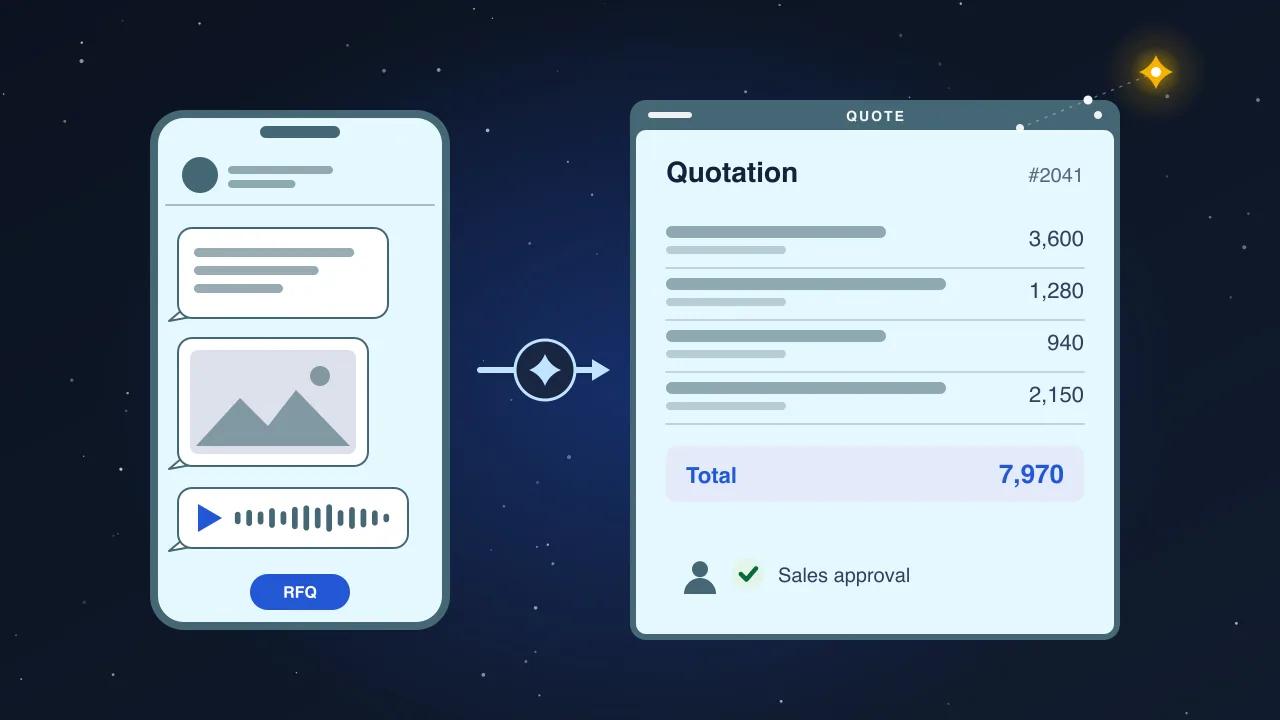
3. An auto-reply and a person within 30 minutes. The auto-reply goes out on WhatsApp or SMS within seconds and says who will call and when. The person calls within 30 minutes during working hours; outside them, a callback queue with a promised time. Neither step quotes a price; the rules for a system that drafts quotes are in the quotation assistant article.
4. A CRM that logs every step. The RFQ form or WhatsApp message becomes a record, then a call task, then a callback or an outcome, and every step carries a timestamp and a source. The monthly report then has numbers: enquiries by source, time to first reply, missed calls, the share followed up within 30 minutes, and outcomes. That is "first caller" without a marketplace: nobody else received the enquiry, and the first reply was automatic.
The honest counter-case
Not every trade needs this, and the forums say so as clearly as they condemn the marketplaces.
"My entire advertising budget for my business is about $150 a year ... I'm turning down half of work I'm offered," an air-conditioning contractor wrote in June 2021. Another in 2023: "100% best thing you can do to get the phone ringing is focus on exceeding your customers expectations." Both are right for their businesses; a veteran's segmentation from 2022 explains why: "Some business models don't lend themselves to word-of-mouth sustainably such as countertop repairs and sink replacements."
Repeat-heavy work lives on referrals: maintenance contracts, a fixed circle of main contractors, the consultant who has specified you for a decade. Transactional and specification-driven work does not: a one-off repair, a tender against strangers, a new city. A general contractor new to a city wrote in 2018 that he was spending $1,000 a month on a marketplace because "I don't know anyone here". That is the case where a marketplace is a bridge, and the site, the profile and the follow-up system are the exit from it.
A veteran remodeler's warning from 2019 also stands: a business "can go belly up waiting for the internet to bring you leads that convert to sales". The platform is built while the referrals pay the bills, and measured against a baseline rather than hope.
"I've had agencies promise the moon and then vanish once the invoice clears, so now I ask for clear deliverables and weekly reports before signing anything," from April 2026. Our version of that is a written diagnosis before a quote, a Day-0 baseline both sides sign, weekly releases on a live build, a 120-day checkpoint, and no promise of leads at any point.
Cost and the first step
RFQ follow-up automation starts at $3,900 for one process: form or WhatsApp enquiry to CRM to call to callback, every step logged and retried, a console your team can watch, two to four weeks. Multi-system work runs $8,000 to $20,000. Every build ships with a maintenance plan from $250 a month. If there is no site to send people to, that comes first; the tender-ready company site starts at $6,800.
The first step costs nothing. Describe how an enquiry travels through your company today, from the first ring or WhatsApp message to the callback, through the contact page. You get a written map of where it stalls, what an auto-reply and a queue would change, and a fixed price for the first release.
Sources
- Angi Leads reviews, Trustpilot, 17 July, 1 September and 6 September 2026.
- Thumbtack reviews, Trustpilot, September 2026.
- Marketing and leads, Mike Holt forum, October 2020.
- Where to spend my marketing budget, ContractorTalk, 2018 to 2020.
- Google Local Services vs other lead sites, ContractorTalk, 2019 to 2025.
- Best companies for lead generation, ContractorTalk, 2021 to 2023.
- HomeAdvisor alternatives, ContractorTalk, 2013 to 2014.
- Best marketing strategies for companies, HVAC-Talk, June 2021.
- HVAC-Talk thread on agencies, April 2026.
- Contractor lead response time study, CustomerFlows, 17 March 2026. Vendor source.
- Federal Trade Commission order against HomeAdvisor, 2023; CallRail, January 2025; BrightLocal, 2026. Cited from our research log; no links recorded.