Type "contracting company profile" into Google in Arabic and the suggestions that follow are pdf, word, ppt and "ready to edit for free". The profile is a document, it is downloaded as a template, and it is edited by hand before every submission. It is also the document that tender files, prequalification forms and vendor portals ask for, so nobody can drop it. This article covers what the profile is used for, what the PDF cannot do, what a buyer checks before calling, what a site must contain to be the profile, and what a supplier portal asks your domain to show. The honest limit comes last: a website registers nobody and classifies nobody.
What a company profile is used for
Three uses recur in every thread and on every vendor page.
Tender submissions. Once a bid is won, the papers are due. Under a video about finding contracting work, viewed 46,000 times, one comment reads, in translation, "I won a tender and need to submit my papers before the deadline." The profile goes into that file next to the commercial registration, the classification certificate and the project record, the سابقة أعمال every form asks for.
Prequalification and supplier lists. Etimad, the government procurement platform in Saudi Arabia, runs supplier lists and prequalification invitations beside its tenders, and the same video's comments include a contractor who wants to join a supplier list and does not know how. Prequalification asks for what the profile holds: sector, past projects with client and value, engineers by discipline, equipment, certificates.
Vendor registration. Aramco, NEOM, SABIC, Ma'aden and the ministries each run their own portal, and the Arabic autocomplete for "supplier registration" lists them one after another. There is a paid market for filling those forms; a classifieds post from the week of 7 September 2026 offers help registering with Aramco and NEOM. The portal asks for the same profile, plus catalogue data.
A studio that sells profile design writes that most government bodies and private clients require an updated profile inside the submission file. Vendor copy, but right about the word that matters: updated.
What the PDF cannot do
It goes out of date the day it is exported. The classification grade expires. The ISO certificate expires. The social insurance and tax certificates expire. A registration guide for Etimad puts the consequence plainly: any expired document halts the file at once. The PDF cannot tell you which of its pages just expired; it is a picture of a date that has passed.
It has no search presence. A buyer who types your company name into Google finds the PDF only if somebody uploaded it somewhere. Otherwise the search returns a social-media post with a phone number, or nothing.
It cannot answer a question. Even the agencies that sell PDF profiles concede this. One lists "applying for tenders" as the profile's main use and, in the same article, notes that the profile allows no direct interaction with customers while the website works around the clock.
The project record has no home. Contractors post their سابقة أعمال as comments under YouTube videos and blog posts, with a phone number and "classified grade one" written into the comment, because there is nowhere else to put it. A record in a comment thread cannot be sent to a consultant or filtered by sector.
What owners and consultants check before they call
An owner on an electricians' forum, writing as a buyer in October 2020: "I do general searches for names, then I try to go to that contractors site. If that contractor does not have a site of their own then its a non-starter for me."
An air-conditioning contractor with two employees, June 2021: "the website gives customers all the information so they only contact you to make a booking or to get a quote."
An electromechanical engineer answering, in Arabic, how a new contracting firm gets clients: build a professional site that shows your services, your past projects and your contact details.
Put together, the check before the call is four questions. Does this company exist beyond the PDF? What has it built, and for whom? Is it classified, in which field, and is the certificate current? Can I reach it now, in my language?
What a tender-ready site contains
The site is the profile when every section of the PDF is a page that can be updated, searched and exported.
| Section | What it holds | What the buyer or the portal does with it |
|---|---|---|
| Project record as prequalification pages | One page per project: sector, client, value, year, scope, consultant, photos; filterable by sector and year | Prequalification forms ask for exactly these fields; the consultant reads the page instead of asking |
| Classification and certificates | Grade and field, ISO, Civil Defence licence, social insurance and tax certificates, each with its expiry date | The expiry register; a document that would halt a file is caught before the file is sent |
| Legal identity | Commercial registration, licence numbers, national address, email on the company's own domain | Vendor portals refuse generic and free email addresses |
| People and equipment | Engineers by discipline, technicians, equipment list | Licence renewals ask for engineer headcount; a 2025 comment reports a Civil Defence renewal that demanded three engineers |
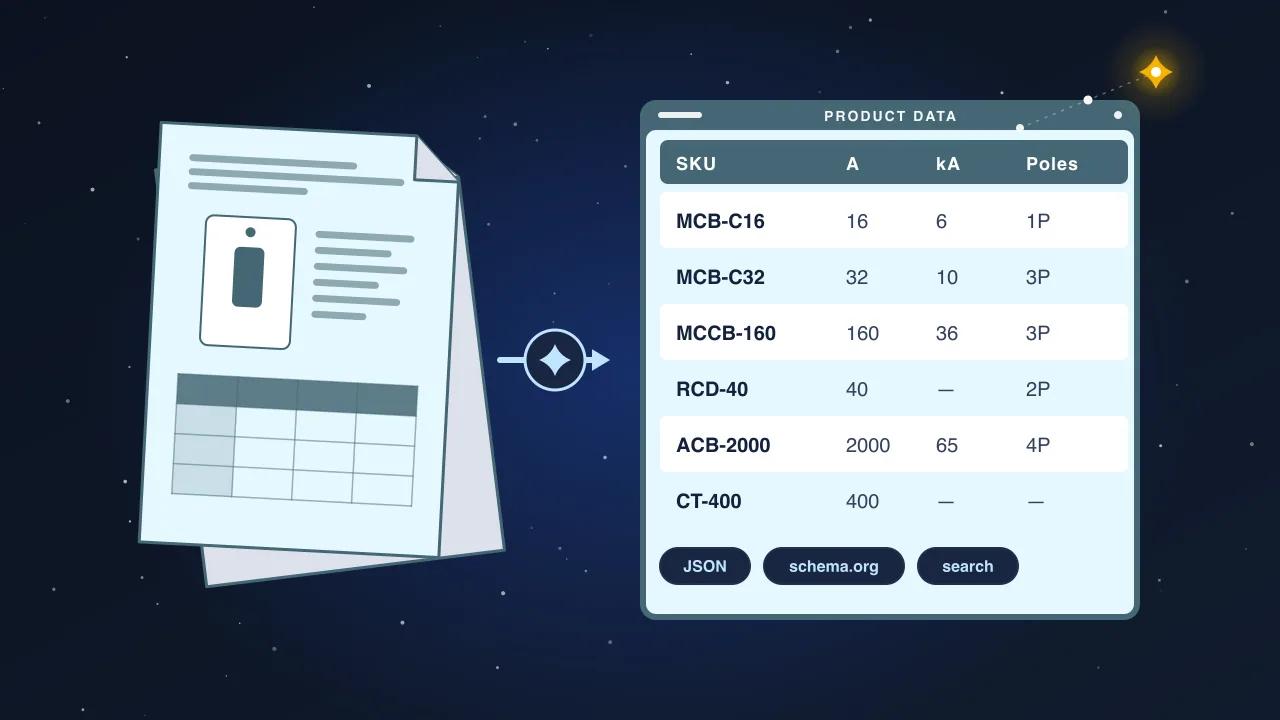
| Catalogue or services with data | Products or services with specifications and images, in both languages | Portals ask suppliers to upload catalogue details with images |
| One-click profile PDF | Generated from the live pages, dated, in Arabic or English | The document the tender file still needs, current on the day it is exported |
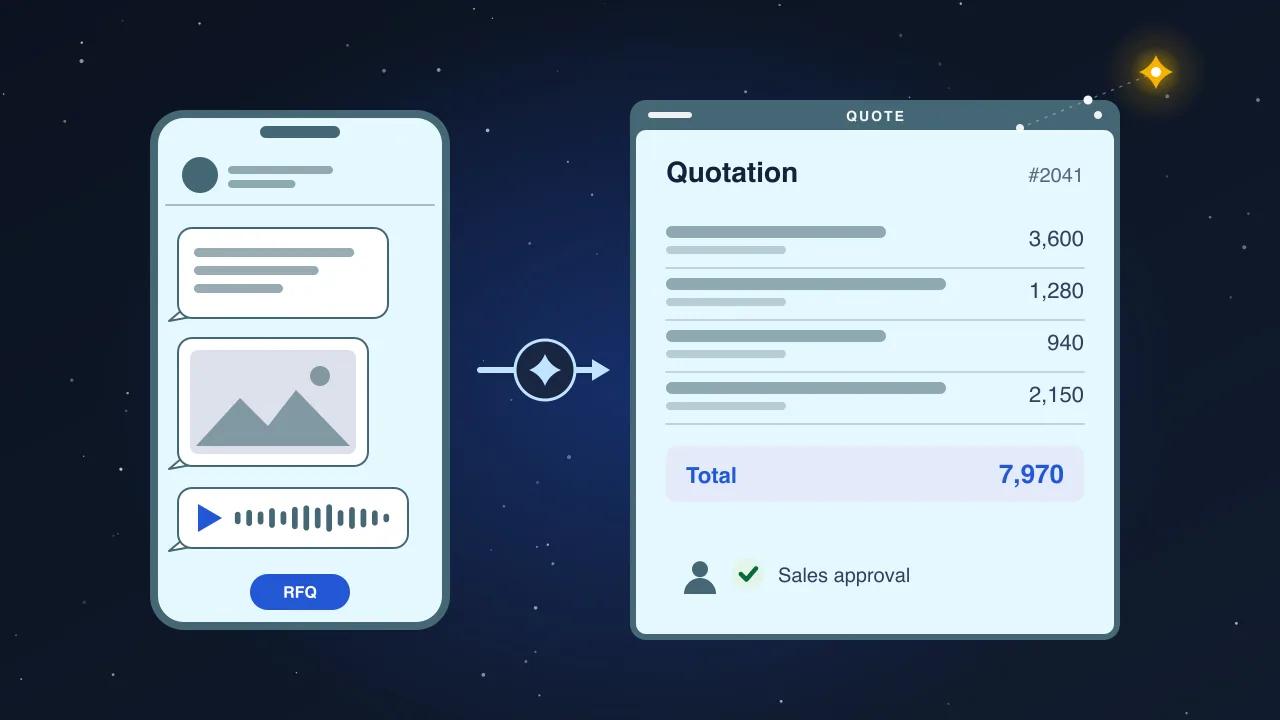
| Contact that is answered | WhatsApp click-to-chat, an RFQ form with attribution, Google Business Profile | The buyer contacts you only to book a visit or ask for a quote, and you know which page produced the enquiry |
Two rules hold the table together: the same numbers in both languages, because the consultant reads English and the procurement engineer reads Arabic; and every expiry date stored as data, not as a scanned image, so the site can list what expires in the next 90 days.
What a supplier portal asks your domain to show
Aramco's material supplier guide, a public PDF from January 2020, is the clearest statement of what a large buyer's portal expects.
The portal user must register with an individual company email address, and the guide spells out what it refuses: "not a generic company e mail such as [email protected], or a public email such as from Hotmail, Yahoo, or Gmail". That is a domain, with mail on it, before anything else.
General commodity suppliers must "upload/add their catalogue details", and the guide adds that "Images are a very important feature of the B2B catalogue", with up to three images per item. That is structured product data with images, not a scanned brochure. The record that satisfies a portal is the same record that satisfies a consultant and a search engine; the field list is in Spec sheets into structured product data.
For Etimad, a registration-services vendor lists what the supplier file needs: a valid commercial registration, an updated tax certificate, a valid social insurance certificate, an activated national address, and a bank account in the entity's name. All of it is data with a date, and a site that stores the date can warn you; a PDF cannot.
The honest limits
A website registers nobody and classifies nobody. The classification grade is issued by the authority. Supplier registration on Etimad happens on Etimad. Vendor registration happens on each buyer's portal, form by form. What the site does is narrower: it is the source you copy from when you fill those forms, the register that tells you which certificate expires next, and the page the buyer opens to check what you submitted.
No tender is won by a website. Tenders are won on price, classification and the record; the site makes the record checkable by a stranger at eleven at night on a phone. We do not promise enquiries or awards from it. The Day-0 baseline we sign before building records what a buyer could find about the company and what he could not, and the 120-day checkpoint compares.
The objection we hear most is fair: "our business runs on relationships, classification and Etimad". It does. The profile still gets checked by the consultant your relationship introduced you to, and the check now happens on a screen before anyone calls back.
Cost and the first step
The tender-ready company site starts at $6,800 and takes four to six weeks: eight to twelve bilingual pages, the project record as prequalification pages, certificates and classification with expiry dates, the one-click profile PDF, WhatsApp click-to-chat, Google Business Profile, an RFQ form with attribution, and the Day-0 baseline. The maintenance plan starts at $250 a month, because certificates expire on their own schedule.
The bilingual company profile template is free: a DOCX in Arabic and English with the same fields the site will hold.
The first step costs nothing. Send your domain or your current profile PDF through the contact page. Within one working day you get, in writing, what a crawler finds under your company name, what a procurement engineer cannot find, and a fixed price for the first release.
Sources
- Marketing and leads, Mike Holt forum, October 2020.
- Best marketing strategies for companies, HVAC-Talk, June 2021.
- How do I get clients for a new contracting company, Arabic Quora, about 2020 to 2025.
- Where do I find contracting work?, YouTube, 46,000 views, comments from about 2023.
- YouTube comments on supplier lists and licence renewals, about 2025.
- How do I get contracting projects, small-projects.org, comments 2023 to 2024.
- Material supplier guide, Saudi Aramco, January 2020.
- Etimad supplier registration, ihkam.sa, 2026. Vendor source.
- Contracting company profile, style.sa, 11 December 2025. Vendor source.
- The difference between a company profile and a website, designcompanyprofile.com, 21 July 2026. Vendor source.
- Google Trends and autocomplete, pulled 14 September 2026: "contracting company profile" is the second related query to "contracting company" in Arabic. Our own pull; no permanent link.