A deposit gate is a rule on your booking page: a slot is held once a small deposit arrives, the deposit comes off the consultation fee on the day, and a booking with no deposit is released after a set number of hours. Doctors asked the booking marketplaces for exactly this for years, in public reviews, before one marketplace added prepayment in July 2026. This post collects what they said, the no-show figures actually published, how the gate runs on WhatsApp, the policy paragraph it needs, the objections from cash-only clinics, and what nobody has measured yet, including us.
What doctors say, in their own words
Reviews of a booking marketplace's doctor-side app on Google Play read the same way for six years. Three, as written:
- 11 January 2020: "Fake reservations. We reached a lot of reservations when we call patients to confirm. mobile closed wasting a lot of time. And we can not take reservations in the same time from clinic."
- 5 January 2021: "Quite discouraging, 99% of patients that book don't turn up. There is need for the developer to add access fee no matter how small ... you don't expect me to be going to the app on daily basis to click 'no show'."
- 6 July 2026: "fake reservations are a real annoyance, especially that some of those cases when reached on phone they would confirm coming and then never show ... a fair solution would be a reservation / access fee charged on patients and can be deducted later from overall monthly invoice."
Three things sit in those reviews. The confirmation call does not work: the patient confirms and still does not come, or the phone is off. The cost is a receptionist's time plus a slot the clinic could not sell to a walk-in. And the fix the doctors propose is the same each time: a small fee at booking, deducted later.
The marketplace's reply, dated 15 July 2026, said it had introduced online payment of the examination fee at booking, because "This helps increase booking commitment and reduce no show." That is the platform conceding the point six years after the first review asked for it; a deposit at booking is now what the market does. The open question is who holds the deposit, sets the refund rule and keeps the patient's number: the platform, or the clinic.
The numbers that have been published
What we can point to:
- A 2019 paper from a tertiary specialist hospital, reported by a health-quality journal, found 18 percent of appointments not attended, and a 68 percent likelihood of a missed Sunday appointment among habitual non-attenders. That is a hospital outpatient department, where the visit is usually free or insured, not a private clinic that charges at the door. A private clinic's rate could be lower or higher; we found no published figure for one.
- Cash-practice doctors on a physician forum, in a 2023 thread on no-show rates, describe the policies they run: "no show no call is automatic 150 charge signed by patient part of intake", new-patient intakes "fully paid for before being able to book", and "email reminders twice before the appointment and a text message reminder the day beforehand". These are policies, not outcome numbers.
- The "99%" in the review above is one doctor's experience of one channel. No marketplace publishes its no-show rate.
That is the honest state of the evidence: one hospital figure, a set of working policies, and years of doctors' own reports. What is missing is the number for your clinic, and a gate that records requested, paid, released and attended bookings is the counter that produces it.
What a deposit gate is
Three rules and a counter.
- A booking is a request until the deposit arrives. The slot is held for a fixed window, commonly 24 hours, shorter for a slot later this week. When the window closes without payment, the slot goes back on the page.
- The deposit comes off the consultation fee on the day. For the patient who attends it is not an extra charge; it is the first part of the bill, paid early.
- Cancel or reschedule in time and nothing is lost. With 24 hours' notice the deposit is refunded or moved to the new appointment. A no-show, or a cancellation inside the window, forfeits it.
What the gate filters is specific: the patient who books three doctors for the same hour and picks one on the morning; the reservation made from a phone that is later switched off; the booking made to hold a slot "just in case". What it does not do is fill the slot of a patient who paid and still did not come. It compensates the clinic for that slot; reminders and a waiting list are what sell it again.
How it runs on WhatsApp
The gate lives on the booking page, but the conversation happens on WhatsApp, because that is where patients already are and where a payment link opens with one tap.
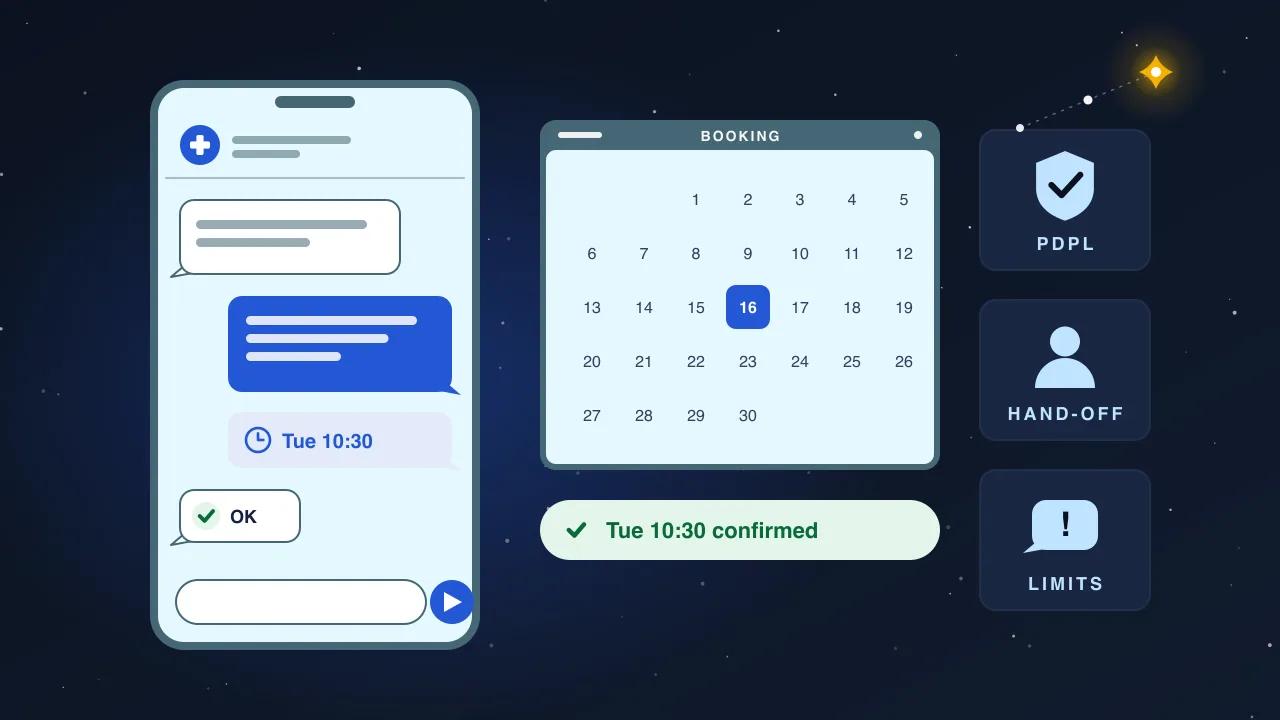
- The patient picks a doctor, a service and a free slot on the booking page, or asks on WhatsApp and the assistant reads the calendar and offers the free slots.
- Within seconds a message arrives from the clinic's verified number: the appointment requested, the deposit amount, a payment link through the clinic's own gateway, the deadline, and the refund rule in one line.
- When the gateway confirms payment, the slot changes from requested to confirmed and the patient receives the date, the doctor and what to bring.
- If the deadline passes, the slot is released, the patient is told, and the message carries a link to book again.
- The day before, the reminder, with a one-tap reschedule that respects the same 24-hour rule.
- After the visit, the receipt showing the deposit deducted, and the review link.
Every step is an event: requested, deposit paid, confirmed, released, reminded, attended, no-show. The clinic reads them monthly; nobody clicks "no show" in an app every day. The gateway is the clinic's own, so the money never passes through us or a marketplace, and nothing clinical enters the flow: a symptom, a result or a photo goes to a person with the conversation attached, as in the WhatsApp assistant checklist.
The policy text
The gate needs one paragraph, printed on the booking page, repeated in the deposit message and pinned at the front desk:
Your appointment is held once a deposit of [amount] is received, within [hours] hours of booking. The deposit is deducted from the consultation fee on the day of the visit. If you cancel or reschedule at least 24 hours before the appointment, the deposit is refunded in full or moved to your new appointment. If you do not attend, or cancel with less than 24 hours' notice, the deposit is kept to cover the reserved time.
The WhatsApp messages that go with it, the deposit request, the confirmation, the reminder and the missed-visit message, are in the free no-show policy and deposit scripts, in Arabic and English, with a consent line for reminders of the kind PDPL expects. Keep the rule identical everywhere; wording that differs between the page, the message and the receptionist produces arguments at reception.
The objections
"We are a cash-only clinic." A clinic brief posted on a freelance marketplace in August 2026 specified "Cash-only payments; no electronic payments available" for its whole system, and it is not unusual. Four forms of the gate work without a card: a confirmation gate with no money, where the patient must reply on WhatsApp within the window or the slot is released; a bank transfer or mobile-wallet payment with the receipt checked by staff before the slot is confirmed; a deposit paid at the front desk by repeat patients for their next visit; or a deposit for new patients and peak slots only, where the fake bookings come from. The same forms answer "our patients do not have cards".
"We will lose patients to the clinic next door that asks for nothing." Possibly some; that is a number to measure, not to guess. Switch the gate on for new patients only, run it for 120 days, and compare bookings, attended visits and released slots with the baseline signed before launch. A gate that loses more attended visits than it saves gets switched off.
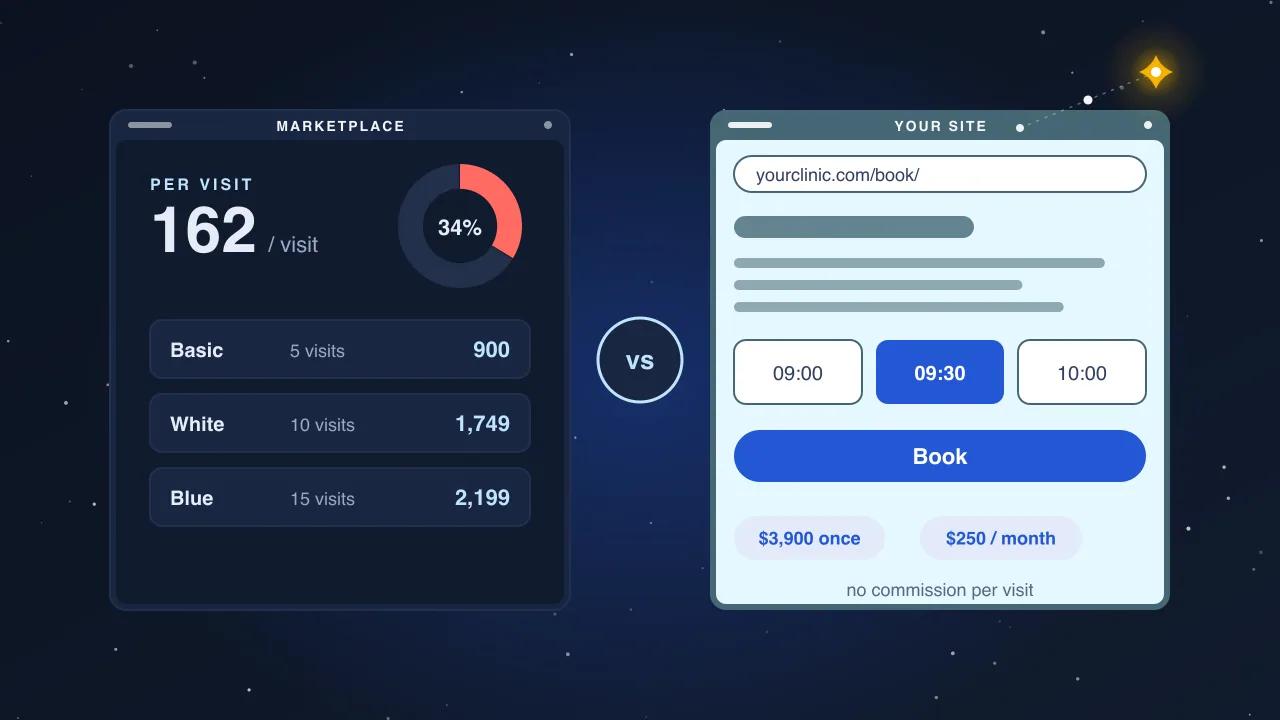
"The marketplace now takes prepayment, so why build our own?" Because the marketplace holds the deposit, the patient's number and the review, and charges per visit. On your own page the deposit rule is yours, the refund runs through your gateway, and there is no commission. The cost side is worked out, with every assumption stated, in a booking marketplace versus your own booking page.
What nobody has measured, including us
Alnitak has not measured a no-show percentage for any clinic, and we do not publish one. The clinic booking site package ships with the events above and a Day-0 baseline signed by both sides; the first number we publish will be a 120-day report from a client who agrees to it, with the method next to it. Until then the case for the gate rests on the doctors' own reports, the marketplace's concession, and the arithmetic of a slot that was booked and not used. Vendor pages carry before-and-after percentages; we have not cited them, because none shows how it was counted.
The first step costs nothing: send the name of your clinic and how patients book today, and you get a written map of where bookings are lost and a fixed price within two working days.
Sources
- Reviews of a booking marketplace's doctor-side app, Google Play, reviews dated 11 January 2020, 5 January 2021 and 6 July 2026, and the marketplace's reply of 15 July 2026.
- Non-attendance at outpatient appointments, a 2019 tertiary-hospital paper reported by a health-quality journal. The page returned an access error when checked; the 18 and 68 percent figures come from the search result snippet.
- Private practice people: what is your no-show rate, strategies to reduce, Student Doctor Network, 2023.
- A clinic management brief specifying cash-only payments, Mostaql, August 2026.
- The no-show policy and the deposit scripts, Alnitak Health, free, in Arabic and English.