A supplier with a good English website and a strong reputation can be invisible to the buyer who searches in Arabic. Not because Arabic buyers do not use English; most of them do, daily. Because the query they type at the moment they need a vendor is often Arabic with the technical term left in English, and that query matches neither the English page nor an Arabic page that translated the technical term away.
This is how those queries look, why a translated keyword list does not find them, and how to build a bilingual keyword map that ends in service pages rather than a glossary.
What Arabic B2B queries actually look like
Pull a month of Search Console queries from any bilingual industrial or services site and three patterns appear.
Mixed script. An Arabic phrase with an English noun inside it: "شركة تطوير مواقع WordPress", "مورد كابلات LSZH", "تحليل SEO تقني". The buyer knows the term in English because that is how the industry uses it, and knows the surrounding words in Arabic because that is how they think. Translating the English noun into Arabic produces a query that is technically correct and rarely typed.
Intent words in Arabic, product words in English. "شركة" (company), "مورد" (supplier), "أفضل" (best), "سعر" (price), "معتمد" (certified) carry the intent. They are the words that tell you whether the query is commercial. The product term carries the topic and is often Latin.
Dialect and spelling variants. The same concept appears with different spellings and regional words: definite articles attached or not, alternative transliterations of the same English term, hamza written or dropped. A keyword tool that treats each spelling as a separate query splits the volume and hides the real size of the cluster.
Why translating your English keywords fails
- Word order and synonyms differ. "Backlink monitoring tool" in Arabic is not three translated words in the same order. The Arabic buyer says something closer to "tool for monitoring backlinks" with "backlinks" left in English.
- The volume is not proportional. A term that is huge in English may be small in Arabic and the reverse. A translated list carries the English priorities into a market with different ones.
- The intent markers are different words. The English list has "best", "top", "near me". The Arabic list has "شركة", "مورد", "معتمد", and location-free commercial markers like "بسعر" (at a price). Miss those and you cannot tell commercial queries from informational ones.
Build the map from Arabic sources
Work in the language, from that language's data.
- Search Console queries, filtered to the Arabic folder, exported for 16 months. This is the only source that shows real mixed-script queries.
- Autocomplete in Arabic, typed with the English product term inside the Arabic phrase, to see how the engine expects the query to continue.
- Competitor titles on the Arabic pages that already rank for your category. Their H1s show the phrasing that works.
- The sales team's inbox. How do procurement emails and WhatsApp messages phrase the request? That phrasing is the query.
Record every variant, then normalise: group spellings and dialect words under one cluster, keep the most common form as the primary, list the others as synonyms.
Cluster by intent, then assign one page each
| Intent | What the Arabic queries look like | Page that owns it |
|---|---|---|
| Transactional | "شركة" or "مورد" + product term, "سعر" + product | Service or product page |
| Commercial comparison | "أفضل" + category, term + "أو" + term | Comparison guide, linking to the service |
| Informational | "كيف" (how), "ما هو" (what is) + term | Guide, linking up to the service |
| Compliance and specification | Standard number, "مواصفات", "شهادة" | Specification or standards page |
| Brand | Your name, a manufacturer you represent | Brand or home page |
The rule that keeps the map honest: one primary URL per cluster per language. The transactional cluster belongs on the Arabic service page with the query as its H1, not on a blog post that never asks for the work. If two pages could answer it, decide which one does and link the other to it.
What the Arabic service page needs
Once the map says which query the page owns, the page has to deserve it.
- The H1 is the query, in the buyer's phrasing, with the technical term in the script they used. Not a slogan, not a translation of the English H1.
- Proof the reader recognises. Case studies, standards, certifications and client types that mean something to that buyer. An English-only testimonial is a weaker signal on an Arabic page.
- A scoped next step with a number. A priced audit or a defined package converts better than a vague "request a quote" on B2B pages, in either language.
- The technical signals. Its own URL,
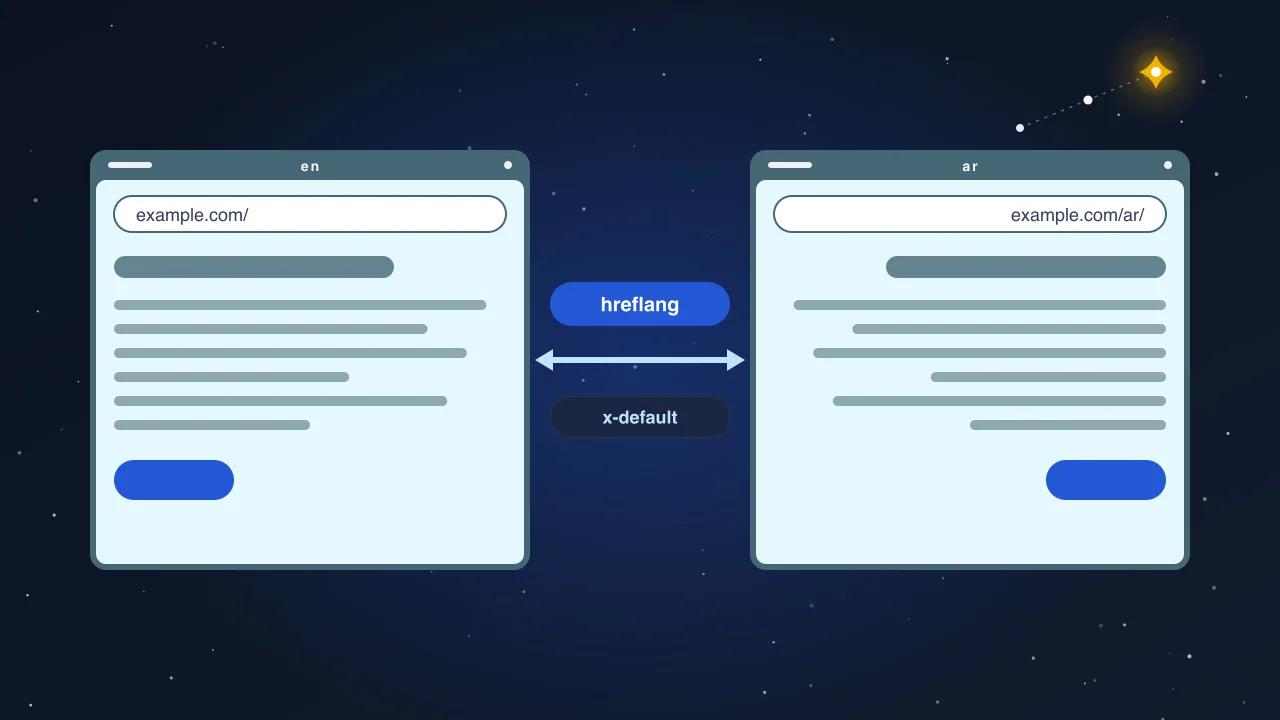
lang="ar", hreflang to the English twin, a self-canonical, and enough real text that the crawler does not classify it as thin. - The same structure as the English page, so the twin rule holds and the language switcher lands on the right place, but not the same words.
Where budgets get wasted
Writing English articles about the market and hoping the Arabic index notices. Buying an Arabic translation of the English site and calling it localisation. Building the Arabic keyword list by translating the English one and then wondering why the volumes look wrong. Each of those produces pages that exist and do not rank, and the fix is the same: research in Arabic, cluster by intent, one page per cluster, write for the query.
A worked example
An electrical systems supplier has an English page for a cable category. The Arabic queries in Search Console show "مورد كابلات" plus the cable type in English, "كابلات معتمدة" plus a standard number, and "سعر" plus the type. Three clusters: transactional, compliance, price. The map assigns the transactional and price clusters to one Arabic product-category page with the supplier phrasing as the H1 and a quotation CTA, and the compliance cluster to a standards page that lists the certifications with the products that carry them. The English twin already exists for each. The pages are linked both ways, hreflang connects them, and the sitemap lists all four. That is the entire strategy, and it fits on one sheet.
What we deliver
A keyword map per language, built from Search Console, autocomplete and competitor data, with clusters, synonyms and one primary page each. Then the content briefs for the pages that own the commercial clusters. Then, if you want, the pages themselves, written in Arabic for the Arabic query and in English for the English one.