A company that sells in two languages does not have "a website". It has several search intents sharing one domain, each with its own queries, competitors and expectations. The sites that rank in both languages treat each one as its own information architecture and then connect the twins. The sites that struggle translate one language into the other and hope the search engine sorts it out. It does not.
This is the working method: research per language, one URL strategy, the technical pairing, localisation that goes past words, links by market, and the order to build in.
Keyword research per language, not per site
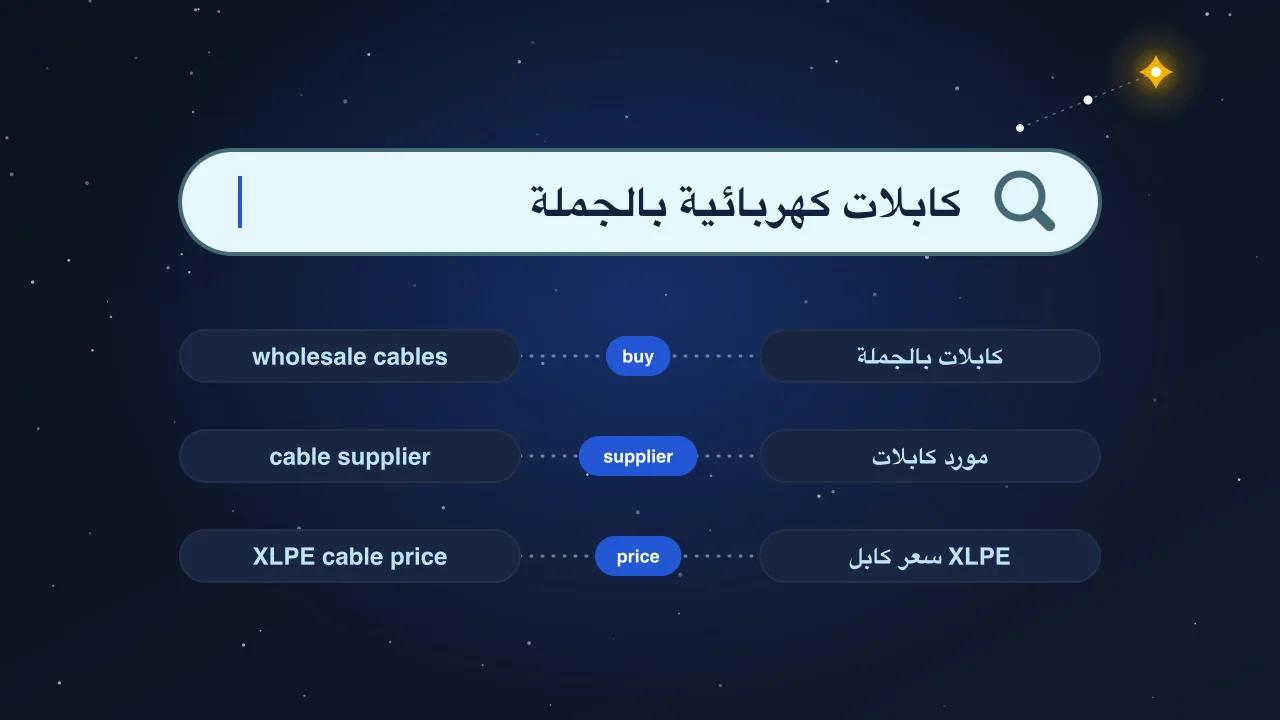
The mistake is to research in one language and translate the keyword list. Volumes and competition are not 1:1, and machine-translated phrases are frequently things nobody types.
- Pull seed terms separately in each language, from that language's autocomplete, search console data and competitor titles.
- Cluster by intent, not by translation: informational (how does this work), commercial (best provider, compare), transactional (price, audit, book).
- Notice the mixes. Arabic-speaking professionals often search with English technical terms inside Arabic phrases. The query is bilingual, so the page title should be too. A keyword list that forces every term into one script misses the real query.
- Assign one primary URL per cluster per language. The Arabic commercial cluster gets the Arabic service page; the English one gets the English service page; neither gets a blog post.
The output is two keyword maps that share a structure but not a vocabulary.
One URL strategy, decided once
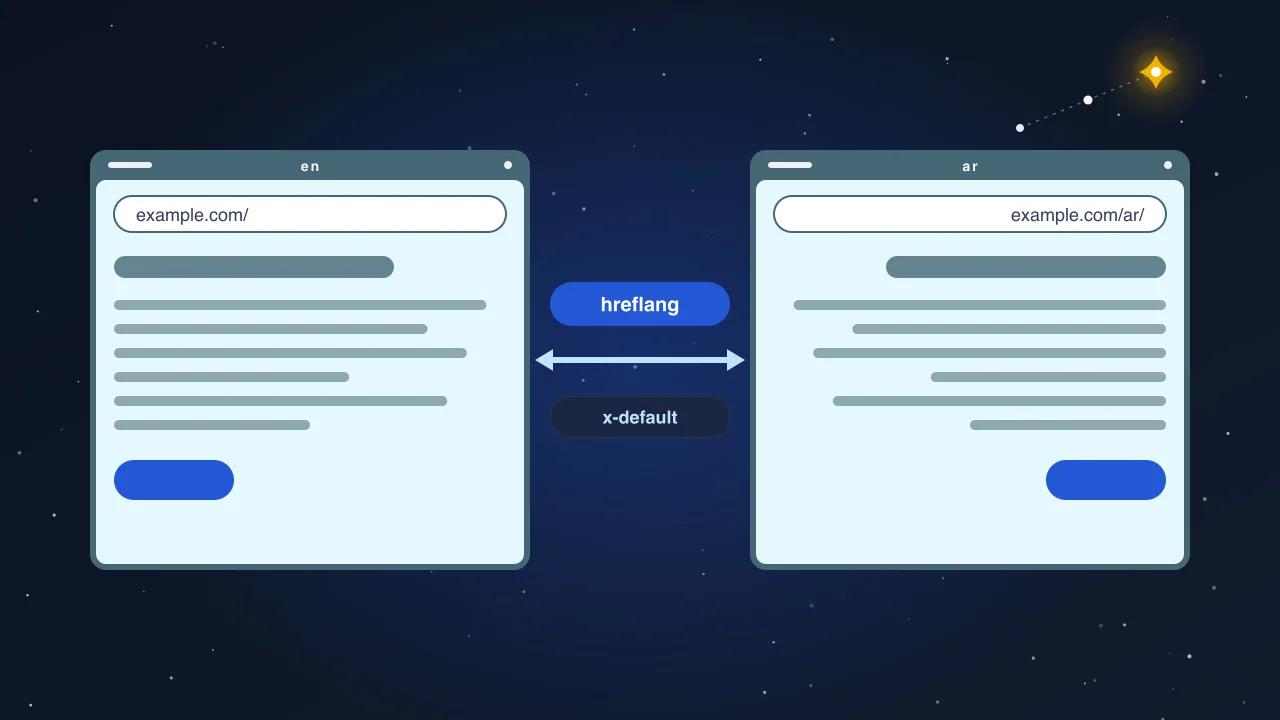
Subfolders win for nearly every business site: the primary language at the root, the second under a prefix (/ar/). They share the domain's authority, they pair mechanically with hreflang, and they need no extra hosting. Subdomains split authority and complicate analytics. Separate domains make sense only when each market has its own brand and team.
Whatever you choose, the language must be in the URL and nowhere else. No cookie-based switching, no browser-language redirects. A crawler that presents as English must be able to fetch and index the Arabic page at its own address.
The technical pairing
hreflang is the mechanism that tells the search engine two pages are versions of one document rather than duplicates. The rules that matter: every page lists all versions including itself, the pairs are reciprocal, the targets are canonical URLs that return 200, language codes are used without regions unless content really differs per country, and x-default points at the primary language page. Emit the Arabic alternate only when the Arabic page exists; a fallback that serves English under an Arabic URL is a duplicate with a label.
Validate with a crawl after every deployment that touches routing. The full implementation and validation steps are in the hreflang guide linked below this article.
Localise beyond the dictionary
A translated page is the floor. What makes a language version convert is everything around the words.
- Proof that matches the market. Case studies, client logos and testimonials that the reader of that language recognises. An English testimonial on an Arabic page is a weaker signal than an Arabic one.
- Contact channels the market uses. If the market lives on WhatsApp, the Arabic page's primary CTA is WhatsApp, not a form.
- Formats. Dates, numerals, currency and address order formatted for the locale by the platform's locale functions, not typed by hand.
- Typography and direction. Right-to-left layout done with logical properties, a real Arabic typeface, and mixed Latin terms spaced correctly. A native reader spots a translated layout in seconds.
- Names. The Arabic H1 is the Arabic query, not a translation of the English H1.
And do not open a language you cannot support. An empty or half-filled language folder is a ranking liability: thin pages that compete with the full ones and teach the crawler that the folder is low value. Two complete languages beat four partial ones.
Links have a geography
Links from sites in the target language and market help that language's pages. Industry directories, associations, suppliers and publications in Arabic help Arabic URLs; their English counterparts help English URLs. A link from an English-language site to the English home page does nothing for the Arabic service page's visibility. Build the profile each language actually needs, and measure each one separately.
Measure each language as its own site
- Search Console: filter the Performance report by the language folder. For the root language, subtract the prefixed folders from the total.
- Analytics: put the language on every event as an explicit parameter. When the primary language has no prefix, splitting on the URL alone files every unprefixed page into one bucket, which makes "does the Arabic site convert?" unanswerable.
- Conversions per language. Leads, calls and WhatsApp clicks, split by the language the visitor was reading. This is the number that decides where the next content budget goes.
The build order
- URL strategy and twin rule. Subfolders, slugs in one script, the rule for when a twin exists.
- Two complete languages before a third. Every commercial page written for its language's query, with real proof and the right contact channel.
- hreflang and canonicals emitted from one helper, validated by crawl.
- Sitemap with alternates, generated from the same data.
- Measurement with language as a dimension.
- Then content. Guides in each language for that language's informational queries, linked up to the commercial pages. Writing more English guides does not index Arabic.
What this looks like when it works
Each language version ranks for its own queries, the language switcher lands on the twin, the crawl report shows no hreflang errors, and the analytics can say which language produced last month's leads. None of that needs more pages than the company can genuinely write. It needs each language treated as a first-class site that happens to share a domain.